Residential properties within North Texas master-planned developments face intense seasonal insect pressures fueled by sub-surface irrigation zones, retaining walls, and dense ornamental turf. In neighborhoods such as…
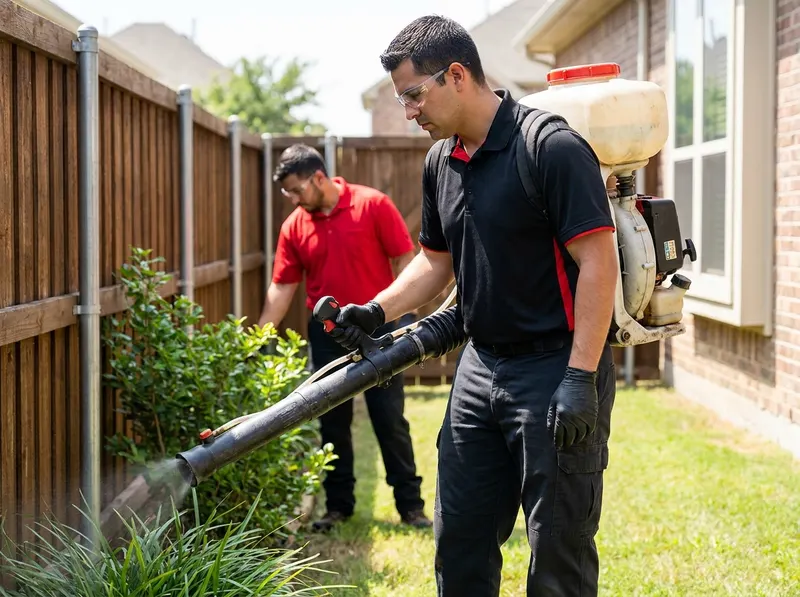
Residential properties within North Texas master-planned developments face intense seasonal insect pressures fueled by sub-surface irrigation zones, retaining walls, and dense ornamental turf. In neighborhoods such as Phillips Creek Ranch and Newman Village, expansive outdoor living spaces, pool water features, and dense landscaping beds provide ideal daytime harborages for container-breeding mosquitoes. Unlike broadcast fogging that dissipates in open wind, the Mosquito Reduction Shield focuses treatment directly into the cool microclimates where vectors rest: the undersides of broadleaf shrubs, shaded weep screeds, covered patio ceilings, and drainage swales. Technicians evaluate property topography and municipal drainage corridors to identify hidden reservoirs, applying biological larvicides containing Bacillus thuringiensis israelensis as cataloged by the EPA mosquito control guidelines to prevent pupation in standing water traps.
Effective exterior protection requires distinguishing between juvenile development points and adult transition resting corridors. Properties bordering natural riparian zones in The Trails of Frisco or Panther Creek encounter sustained migratory pressure from creek beds and community catch basins. CopperNest Pest Defense installs a targeted multi-zone defensive boundary using high-pressure air-assisted misters. These units apply polymer-bonded synthetic pyrethroids and botanical extracts calibrated according to CDC integrated mosquito management standards to bond firmly to plant cuticles without causing foliage scorch. The residual barrier resists degradation from afternoon ultraviolet exposure and automated sprinkler cycles, maintaining protective efficacy for 21 to 30 days. Drainage outlets, weep holes, and decorative stone stacks typical of homes in Starwood and Richwoods are carefully inspected to treat resting insects without staining light masonry or compromising indoor air quality.
Homeowners selecting outdoor protection must weigh spot treatments against seasonal recurring maintenance. Over-the-counter battery misters and tabletop spatial repellers merely shift flying pests several feet without reducing aggregate local counts, leaving children and domestic pets vulnerable to vector-borne pathogens cataloged by the Texas Department of State Health Services. The CopperNest Pest Defense protective shield establishes an architectural safety perimeter by breaking both the reproduction and feeding cycles. For residences near open water reserves, such as Grand Park or Frisco Commons Park, pairing perimeter landscape misting with biological microbial larvicides applied directly to catch basin sumps delivers long-term containment. Applications follow guidelines from the Texas A&M AgriLife Extension, applying active ingredients at dawn or dusk to avoid non-target foraging periods documented by the Pollinator Partnership while strictly respecting urban applicator licensing overseen by the Texas Department of Agriculture.
1. Structural diagnostic inspection assesses perimeter fencing, French drain outlets, ornamental shrubs, and low-lying turf perimeters across the residential parcel.
2. Water source neutralization applies solid formulation larvicides to storm grates, decorative pots, and low-elevation collection areas compliant with American Mosquito Control Association guidelines.
3. Foliage application deploys microencapsulated adulticides to leaf surfaces, tree canopies under 10 feet, and perimeter structural fencing.
4. Architectural perimeter sealing treats expansion joints, stone retaining bases, and shaded patio eaves up to ground-level foundation thresholds.
5. Post-treatment physical verification reviews drainage slopes and establishes 21-day residual cycle schedules under National Pesticide Information Center technical criteria.
Every job gets a firm, written price after a free on-site visit.
For standards, safe disposal, and service guidance on pest control services in Frisco, TX, useful references include U.S. EPA, ENERGY STAR, U.S. Dept. of Energy, Consumer.gov, U.S. Census Bureau, and Google Maps. General consumer and small-business resources are available from USA.gov, Better Business Bureau, FTC Consumer Advice, U.S. Small Business Administration, and Ready.gov.
Tell us about your mosquito reduction shield job in Frisco and we'll send a clear, written quote, usually the same day.
 CopperNest Pest Defense